
Introduction
Thin film deposition in high vacuum is a specialized technique used to create thin film coatings in a low-pressure environment. High vacuum conditions are essential for certain applications, particularly when dealing with sensitive materials or when precise control over the deposition process is required. The pressure levels in high vacuum systems typically range from around 10^-3 to 10^-8 Torr (1 Torr is approximately equal to atmospheric pressure). Low-pressure environment is crucial for thin film deposition because it helps minimize unwanted interactions between the coating material and the surrounding gases.
Thin Film Applications
High vacuum thin film deposition finds applications in various industries, including semiconductor manufacturing, optics, electronics, and advanced coatings. Some examples include:
• Semiconductor Devices: High vacuum techniques are used to deposit thin films for microelectronics, such as transistors, interconnects, and memory devices.
• Optical Coatings: High vacuum deposition is crucial in producing anti-reflective coatings, mirror coatings, and filters for optical devices like lenses, telescopes, and cameras.
• Thin Film Solar Cells: High vacuum methods are employed to create thin films for solar cells, such as CIGS (copper indium gallium selenide) and CdTe (cadmium telluride) solar cells.
Thin Film Deposition Techniques
Various deposition techniques can be employed in high vacuum environments, including:
- Physical Vapor Deposition (PVD): In evaporation, the coating material is heated to its vaporization temperature, and the vaporized atoms or molecules condense on the substrate to form a thin film. In sputtering, energetic ions bombard a target material, causing its atoms to be ejected and subsequently deposited on the substrate.
- Chemical Vapor Deposition (CVD): precursor gases react to form a solid thin film on the substrate surface. High vacuum offer better control over the reactions and can lead to high-purity films.
- Atomic Layer Deposition (ALD): precursors are introduced sequentially in a cyclical manner, allowing for precise control of film thickness and excellent conformality.
Polycold Applications
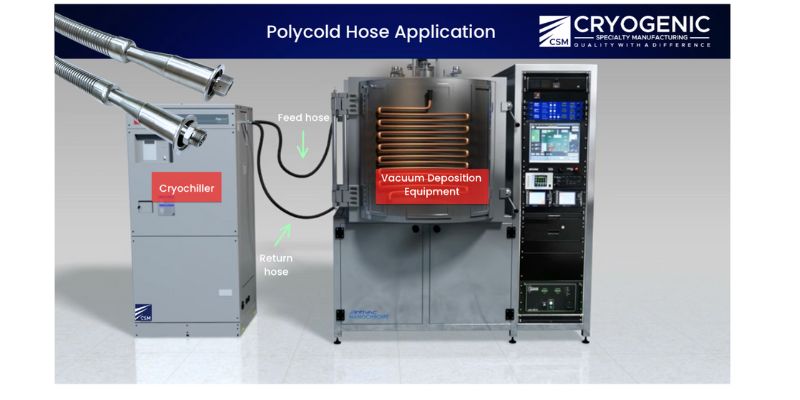
Polycold techniques can significantly improve vacuum pump down time in thin film deposition processes. Vacuum pump down time refers to the duration it takes to reduce the pressure inside the vacuum chamber to the desired operating level. Polycold system produce very low temperature surfaces to trap water vapor and condensing gases, that otherwise are challenging to traditional vacuum pumps such as turbomolecular pumps or diffusion pumps.
Polycold techniques also result in a lower base pressure inside the vacuum chamber, improve the quality of the deposited films, refer CSM youtube video…..(click to watch)
Challenges in Polycold System
While Polycold systems offer several benefits, they also come with their own set of challenges. Some of the major challenges associated with Polycold systems include:
- Condensation and Frost Formation: During cryogenic cooling, condensation and frost can form on the cold surfaces of the refrigerant hoses, causing unsafe work environment, cold burn injury and wet floor.
- System Reliability and Downtime: Heavily frozen refrigerant hoses usually experiences premature fatigue crack causing process downtime, increase maintenance cost, costly refrigerant refills, danger of refrigerant leakage to environment, and compromised work environment safety.
- Power Consumption: Cryogenic cooling systems can be energy-intensive, poor insulation on refrigerant hoses leads to higher power consumption.
- Complexity and Cost: Polycold systems can be complex and require specialized components such as cryogenic cooling units and control systems. This complexity can lead to higher upfront costs and maintenance expenses, making them a significant investment for research laboratories and industrial facilities.
CSM Solution – PolyFlex
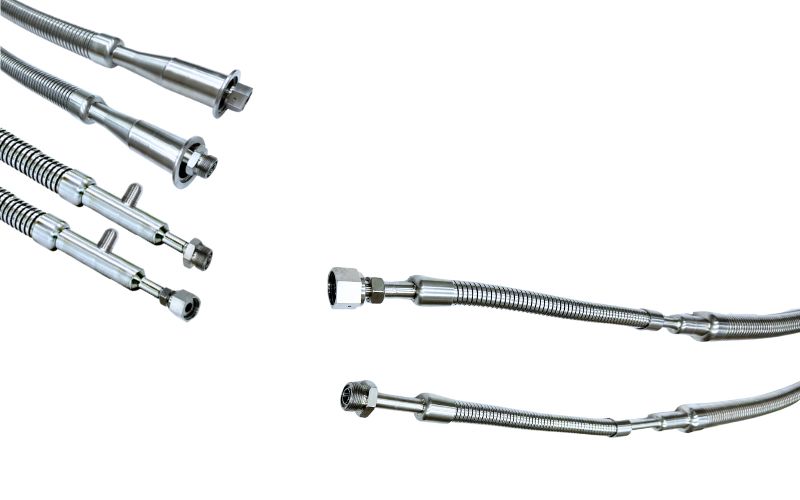
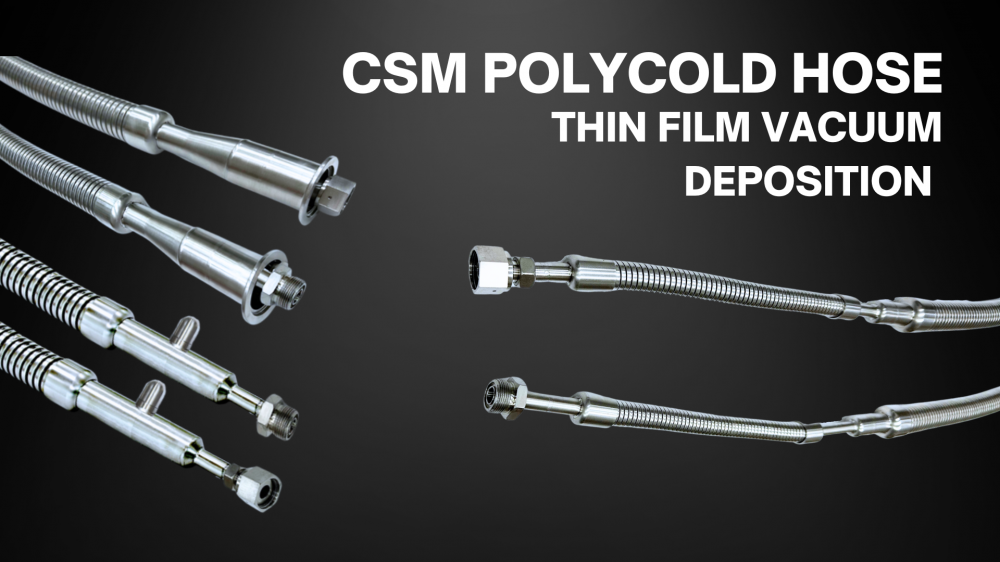
CSM Poly-Flex heralds a new era in polycold hose technology, offering minimal heat leaks, top-tier safety, and exceptional durability. Its robust spiral-wrapped jacket ensures resilience in rugged Polycold Cryochiller applications. This innovation operates with either self-contained static vacuum or dynamic vacuum using external customer process vacuum.
In semiconductor industries, Poly-Flex slashes energy consumption in thin film deposition processes. It’s more than an innovation—it’s a revolution. With its groundbreaking features, Poly-Flex redefines hose technology, enhancing efficiency, reliability, and safety like never before.
Features & Benefits
The Poly-Flex transfer hose represents a significant advancement in hose technology, addressing and eliminating the common issues associated with traditional polycold hoses.
No Icing, Frosting, or Condensation:
Say goodbye to problems like icing, frosting, and condensation. The Poly-Flex hose is designed to maintain a consistent temperature, ensuring that these issues are a thing of the past.
Energy Savings and Efficiency:
Its lightweight stainless steel construction has a remarkable cooling efficiency, minimizing cool-down loss. This results in energy savings and a reduced load on cryochillers during initial start-up.
Unmatched Flexibility and Ease of Use:
Poly-Flex boasts exceptional flexibility for both installation and maintenance. With the industry’s lowest static and dynamic bend radius, it stands out among all polycold hoses on the market.
Extreme Cold Flexibility:
Operating even at temperatures as low as -120°C, the vacuum-insulated design ensures the hose remains flexible. This eliminates the risk of rupture or breakage when flexing, adding durability and reliability to its impressive capabilities.
Enhanced Safety with Stainless Steel Protection:
The tough and anti-kink stainless steel spiral wrap outer covering offers not only durability but also heightened safety. This eliminates the potential hazards caused by broken or loose wires, which are common in traditional wire-braided sleeve polycoldhoses.


