This section outlines essential safety procedures to operate cryogenic systems. Strict adherence to these guidelines is mandatory for all personnel involved in the usage, handling, or maintenance of such systems. We strongly recommend all users share cryogenic system safety protocols with all personnel, including those who may be at risk of exposure during operation.
While the cryogenic system is designed for optimal operational safety, user vigilance remains crucial. Users should thoroughly review and understand all Safety sections. Additionally, user understanding of the cryogen is important for enhancing awareness, ensuring proper handling, and fostering emergency preparedness.
For a smooth and safe operational environment, we strongly recommend periodic safety reviews of operators. Always revisit these safety procedures to reinforce safe practices and mitigate potential hazards.
For user safety and optimal equipment performance, please read and thoroughly understand this Manual before beginning any work.
We strongly recommend making this manual readily available at two key locations for easy access and quick reference to ensure operational safety:
- Department head office (For easy access by the department leader).
- Near the CSM equipment with protective film folder (For easy access and quick reference by the operator).
1.1 Safety Warnings
1.1 Safety Warnings
Cryogenic liquids, also known as cryogens, are liquefied gases maintained in their liquid state at extremely low temperatures, typically with boiling points below -150°C (123 K). Among the most common cryogenic fluids are liquid nitrogen (LN2) and liquid hydrogen (LH2), which exist in a liquid state at -196°C (77 K) and -253°C (20 K), respectively.
Throughout this manual, CSM provides Safety Notices to highlight sections requiring extra attention. These notices contain crucial information for the safe handling of LN2 and must be read carefully to minimize the risk of accidents.
1.2 Safety Guidelines
1.2.1 Personal Protective Equipment
Like other hazardous chemicals and gases, cryogenic fluids require proper storage and handling techniques to minimize the risk of injury. It is crucial to wear appropriate Personal Protective Equipment (PPE) while handling cryogenic fluids:
- Safety glasses or goggles.
- Protective face shield.
- Dry, loose-fitting, non-absorbent and non-porous cryogenic protective gloves with gauntlets.
- Long-sleeve cryogenic coveralls or smocks.
- Waterproof cryogenic apron.
- Closed-toe shoes.
By adhering to these PPE guidelines, you can significantly reduce the risk of injury while working with cryogenic liquids.
1.2.2 Training
Operators should be trained and certified before handling cryogenic fluids. The training should cover the following topics:
- Nature and properties of cryogenic fluids in both liquid and gaseous states.
- Standard procedures for handling cryogenic fluids.
- Appropriate use of approved cryogenic materials.
- Correct use of PPE and where to find it.
- Emergency procedures for handling situations like leaks, spills, and fires.
- First aid procedures.
- Housekeeping practices.
1.2.3 Working Environment
An ideal working environment for cryogenic fluids shall be:
- Properly maintained.
- Equipped with safety and firefighting equipment.
- Restricted to authorized and protected personnel only.
- Large, open, and well-ventilated with air handlers and exhaust ventilation.
- Equipped with oxygen-deficient sensor with audible and visible alarm.
1.2.4 Storage Location
The cryogenic fluids storage location should be:
- Large, open, and well-ventilated rooms with air handlers and exhaust ventilation.
- Clearly labelled with relevant hazard symbols at the entrance.
- Equipped with hydrogen detectors if the cryogenic fluid is LH2. LH2 should be vented to a safe location. If ductwork is involved for venting, it should be independent of other systems and free of ignition sources.
- Outfitted with Class I, Division 1, Group B electrical equipment as described in the National Fire Protection Association Standard 70, “National Electric Code,” within 3 ft of hydrogen sources. Class I, Division 2, Group B electrical equipment should be used in the range of 3 ft to 25 ft away from hydrogen sources.
1.2.5 Precaution for Transfer, Usage or Storage of Cryogenic Fluids
An operator who transfers, uses, or stores any cryogenic fluids should observe the following precautions:
- Never breathe in cryogenic vapors. [1]
- Remove any ice near the neck or vent of a cryogenic vessel to prevent pressure accumulation.
- Avoid using cryogenic vessels with frost buildup on the outer surface as this may indicate damaged insulation.
- Adopt a buddy system for tasks involving cryogenic fluids (2 or more people).
- Only use pipes specifically designed for transferring cryogenic fluids. Do not use plastic or latex tubing.
- Ground all stationary hydrogen equipment to prevent sparks.
- Bond mobile and stationary hydrogen equipment to a common ground before LH2 transfer.
- Purge LH2 transfer piping with inert gas only..
1.2.6 Oxygen-Deficient Atmosphere
When a cryogenic fluid reaches its boiling point, it vaporizes and expands multiple times (696 times for LN2 and 848 times for LH2) more than the original volume, rapidly displacing air and reducing the oxygen level.
According to the Occupational Safety and Health Administration (OSHA), an environment with an oxygen level below 19.5% is considered an oxygen-deficient atmosphere. A healthy human can begin to experience asphyxiation when the oxygen level falls below 17%. The table below presents the impact on a healthy human with respect to different atmospheric oxygen concentrations:
Oxygen level (%) | Effects on Healthy Human | Manifestation Timeframe |
17 | Deep breathing. | Rapidly |
Faster heartbeat. | Rapidly | |
16 | Dizziness. | Rapidly |
Slow reaction time. | Rapidly | |
15 | Impaired attention and coordination, irregular breathing, rapid fatigue, loss of muscle control. | Rapidly |
12 | Serious faulty judgement. | 10 minutes |
Immobility. | 10 minutes | |
Loss consciousness, brain damage. | 2 hours | |
10 | Immobility, Nausea, Vomiting. | 4 minutes |
Loss consciousness. | 10 minutes | |
6 | Loss consciousness. | 10 minutes |
Coma. | 1 minutes | |
Death. | 5 minutes |
Observe these precautions if cryogenic fluids are handled in an enclosed or semi-enclosed area:
- Do not enter an area with oxygen alarm triggered. Evacuate from the oxygen-deficient area immediately.
- Open possible doors and windows or use mechanical ventilation to disperse the cryogenic vapors and bring in fresh air.
- Only consider turning off the cryogenic fluid source when proper Self-Contained Breathing Apparatus (SCBA) and PPE are equipped. Never enter a closed space until it is purged, and oxygen concentration level has returned to normal level.
- Wear SCBA to assist the evacuation of a potentially incapacitated operator.
- Implement LOTO (refer to Section 1.4) to prevent unintended opening of valves.
1.2.7 Cryogenic Injuries
Cryogens, cryogen vapors 5 and uninsulated pipes or vessels are sources of extremely low temperature. Direct contact with these can pose a significant risk of cryogenic injuries:
- Even a brief contact can cause cold burns on the skin, similar to heat burns from high temperatures.
- The severity of cold burn depends on the temperature and the duration of exposure.
- Frostbite occurs due to prolonged exposure of body parts to extreme temperature.
- Prolonged exposure to cryogens (seconds) can damage the eyes, and respiratory system if inhaled.
To prevent and minimize the risk of cryogenic injuries, operators must adhere to the following guidelines:
- Always identify the potential cold sources or surfaces and keep a distance from them.
- Wear appropriate PPE to avoid direct contact with cold sources.
- For cryogenic burns, promptly flush the affected area with lukewarm water at 41°C – 46°C (105°F – 115°F).
- If skin sticks to a cold surface, flesh may be torn off upon removal. Flush the affected area with lukewarm water first before gently peel off the skin from the cold surface.
- Before disassembling any equipment for maintenance, warm it up to atmospheric temperature with warm GN2.
1.2.8 Pressure Buildup / Explosion
Cryogenic fluids inside cryogenic piping or storage vessels are warmed up due to:
- Heat transfer through thermal insulated wall.
- Heat transfer through uninsulated pipes or surfaces.
- Heat leak through damaged thermal insulation.
Due to the rapid expansion in volume after the boil-off of LN2, the pressure inside an enclosure/ vessel can reach dangerously high levels if the following situations occur:
- Trapping, or inadequate venting of cryogen vapor.
- Failure of protection systems such as relief devices or rupture disks.
- Introducing cryogen into a warm enclosure/vessel.
Pressure buildup inside a cryogenic vessel or piping that exceeds the design limit may result in a rupture/burst, causing a sudden release of cold cryogen and cryogen vapor, along with projection of mechanical parts. To avoid this:
- Review the operating procedures before beginning a process.
- Ensure the buildup pressure is properly vented.
- Ensure correct sizing of relief devices. Equip pressure relief valves and backup pressure relief devices such as rupture disks. Any system configuration that traps cryogen or cryogen vapor must be equipped with a relief device.
- Never plug, cap, restrict or remove any relief device.
- Replace a faulty or leaking relief device.
- Do not tamper with, adjust or disable an adjustable relief device without proper review.
- Purge the connections after each assembly and disassembly. This eliminates contaminants such as foreign particles or moisture.
- Never use an equipment with failed or impaired thermal insulation. This includes equipment with dented or damaged surface which may affect the thermal insulation.
- Cools down the cryogenic vessel gradually before filling with LN2.
- If maintenance needs to be done on cryogenic equipment, ensure it is emptied of cryogen. Release all the pressure and warm up the equipment to atmospheric temperature before any disassembly.
- A toppled-over dewar may have its thermal insulation compromised. Do not attempt to stand it upright. Evacuate the area and report the incident immediately.
1.2.9 Fire and Explosion
Cryogens such as LH2 are flammable and burn with an invisible flame. LH2 vapor can be self-igniting when released under high pressure . Operator should observe the following precautions to avoid a fire or explosion:
- Keep combustible materials away from hydrogen (LH2 and LH2 vapor).
- No spark-producing operations (welding, cutting, etc.) is allowed within 30.50 m (100 ft) of LH2 vessel or piping.
- Spark-producing operations can only be conducted on a LH2 equipment after the equipment is purged with an inert gas.
- Use hydrogen detector to ensure no hydrogen in the area.
- It is mandatory to equip a 4.5 kg (10 lbs) multipurpose or CO2 fire extinguisher within 15.24 m (50 ft) of potential hydrogen sources.
In case of a LH2 spill or fire,
- Shut off the hydrogen flow or source immediately.
- Use a hydrogen flame detector to check for fire. If unavailable, use a long piece of wood or combustible material to probe for flames before approaching the spillage area.
- Spray water on the spill to prevent a fire.
- Spray large quantities of water on adjacent equipment to cool it down.
- Only attempt to extinguish small fires. Contact fire brigade immediately.
1.3 Safety Labels
CSM prioritizes safety in our designs. We attach warning labels to alert operators of any potential hazards encountered around the equipment.
| Labels | Reminder to Users |
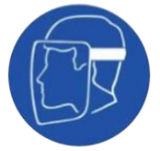 | Always wear a face shield when working with LN2 to protect yourself from direct inhalation. |
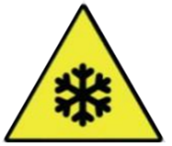 | Cold LN2 Area! Wear appropriate clothing and gloves to prevent frostbite. |
 | Wear cryogenic gloves to protect your hands from contacting cold LN2. |
 | Health Hazard! Exposure to LN2 can cause serious health problems. |
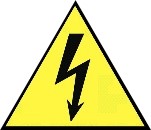 | Electrical Hazard! Live electrical source nearby. Beware of electric shock. |
1.4 Lockout Tagout (LOTO) Procedure
LOTO procedure aims to prevent an undesirable release of hazardous energy during any servicing, maintenance or modification activities. These requirements must be strictly followed when it is necessary to work on any equipment that may release any form of hazardous energy, including, but not limited to electrical, rotational, mechanical, chemical, hydraulic or pneumatic energy, while the equipment is shut down.
1.4.1 Authorized personnel
Only an authorized personnel is allowed to perform LOTO on the equipment:
- An affected personnel is the person who operates or uses the unit, on which servicing and maintenance is to be performed under LOTO on his working unit.
- An authorized personnel is a person who locks out or tags out the unit in order to perform servicing or maintenance on that unit. An affected personnel can become an authorized personnel when the personnel’s duties include performing servicing or maintenance under LOTO.
- A manager or supervisor is a person who provides the required LOTO equipment, controls the emergency keys for LOTO locks, and maintains the records of LOTO events.
1.4.2 LOTO Equipment
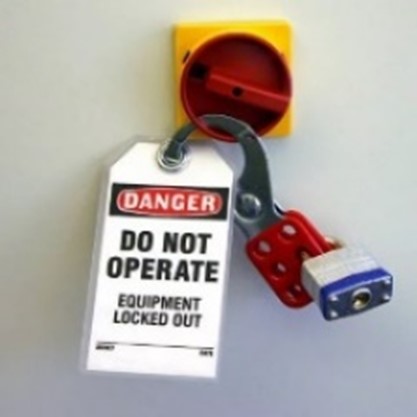
Lockout/Tagout equipment usually consists of the following, as shown in Fig. 1.1:
- Padlocks and Padlock Labels: Padlock usually has a red body and comes with labels for writing in the names of authorized personnel and manager.
- Keys: Each LOTO equipment is required to have 2 keys, primary and emergency. Authorized personnel hold the primary key to apply the lock, which the emergency key must be kept in a secured area with access limited to the authorized personnel’s immediate manager.
- Tags: Tag is usually attached to the padlock with a nylon locking cable tie.
- Others: Lock hasps, circuit breakers and valve lockout devices whenever necessary.
1.4.3 Applying LOTO
- Notify the affected personnel.
- The affected personnel should stop the unit operation and leave the operating area.
- Authorized personnel should ensure the unit is safe for shut down.
- Perform the system shutdown. Refer to
Section 8.1. - Turn off the circuit breaker. Affix LOTO lock to the circuit breaker.
- Enter all the required information on a tag and apply it to the lock with nylon cable tie.
- Disconnect the Controller power plug from the power socket. Affix LOTO lock to the power plug. Repeat Step 6 for the Controller power plug.
- Use a lock hasp to affix the LOTO lock to the Controller power switch. Repeat Step 6 for the Controller power switch.
- Ensure LN2 and GN2 supplies are switched off. Affix LOTO locks to the supply valves of LN2 and GN2. Repeat Step 6 for the supply valves.
- Verify that all stored energy is released.
- No LN2 or LN2 vapor remains in the system.
- No GN2 remains in the system.
- All valves (Normally closed) should be deenergized or closed.
- No pressure remains in the system.
- No stored electrical energy in the system
- Verify the LOTO procedure.
- Power up the Controller. Neither the Controller nor any valves should respond.
- Test and ensure a zero-energy state for the Controller circuits.
- The system or equipment is now locked out and ready for maintenance.
1.4.4 Release from LOTO
Observe the following before removing LOTO devices and restoring energy to the unit.
- Ensure the unit is safe to reenergize.
- Clear all tools and personnel. Ensure that all tools and personnel are at a safe distance from the unit.
- Remove any grounding devices (if used).
- Ensure that any removed safety guards, such as safety relief devices are reinstalled.
- Remove the LOTO locks and tags .
- Reset all the energy isolating devices.
- Notify the affected personnel that the unit is back in service.